October 6, 2025 by Bella DePaulo
Meet a brilliant and brave scholar and activist
Recently, I received an email from MahSa Hariri, who described herself as “an Iranian women’s rights activist focusing on the lived experiences and challenges or single women.” I didn’t realize just how extraordinary and brave it was to live as a single woman in Iran, or to try to become a scholar or an activist.
As you will learn from the interview below, MahSa Hariri was succeeding in her 20-year career in a large organization. She had excellent credentials and was doing great work. But when she wanted a promotion to manager, she was told she could not have that job because she was not married. She was given a one-year deadline to get married and then she could become a manager. Academia was a daunting experience, too: She was in a doctoral program but faced so much harassment and discrimination, she ultimately left.
In the email, MahSa Hariri was asking me to do an interview about my experiences as a single woman and what I’ve learned about singlism (the stereotyping and stigmatizing of single people and the discrimination against them). I agreed, and I will share that interview in a future story.
But far more compelling and inspiring than my own experiences are MahSa Hariri’s. I asked her if she would answer the same questions she asked me. I am so immensely grateful to her for doing so, and for all she is doing for single women in Iran. I think she will also make a difference far beyond her home country.
The Interview
Could you share some of your personal experiences as a single woman and how these have shaped your perspective on social discrimination?
Five years ago, I left a twenty-year-long and successful career in organizational work due to severe burnout, at a time when I had already been living independently from my family for six years, as a single and self-reliant woman. Shortly afterward, as I sought support from a therapist and a coach to navigate that difficult period and began my own journey as a coach and activist – I came to realize that what had led me to leave both my corporate career and my doctoral studies in Marketing Management was the experience of discrimination at the intersection of being a woman, being single, and being independent in a country like Iran.
I had felt gender-based discrimination since entering adulthood and university, during my undergraduate studies in computer engineering. Over time, I encountered more examples – lower pay, heavier workloads, and fewer opportunities. But things intensified after I turned thirty, when society began to view me as “past the age of marriage.” From that point on, being single – and later, living independently – added new layers of pressure.
As a single woman in a mid-level management position at a large organization, I was first denied a specialized role as brand manager. I was told that the position involved direct communication with the CEO and, therefore, could not be assigned to a woman. Later, I entered a different role as supervisor of digital communications, but was given a one-year deadline to get married, because “single women can’t be managers.” My professional performance during that year shifted some opinions, but the barrier to advancing toward the position of General Manager remained.
In academia, too, I faced harassment and discrimination as a single woman, which ultimately led me to leave my doctoral program. At first, I concealed my independent living situation due to cultural pressures. But once it became known, I was threatened with the loss of financial independence unless I accepted demands that violated my ethical and professional boundaries.
In our culture, being a woman, being single, and being independent are three taboo identities – markers of defiance that society is unwilling to accept. These are just some of the experiences I’ve faced – experiences that likely wouldn’t have occurred had I not been a woman, or single, or independent.
When and how did you first become aware of the specific discrimination faced by single women? What specific forms of discrimination have you experienced due to being single? What are some of the more common stereotypes about single women, and how do they differ from those about single men?
I first became aware of the specific discrimination against single women at the age of 32, when I was told I couldn’t be promoted to a managerial position because I was unmarried, and was given one year to get married to receive the role officially. At the time, I was a doctoral student with over a decade of professional and academic experience.
As for the types of discrimination I’ve faced solely because of being single, I’ve experienced unequal working hours, lower income, academic exclusion, difficulty renting a home, limited access to health insurance, and even biased behavior from neighbors after I became a homeowner, among many other examples.
Regarding the differences in stereotypes about single women and single men: because male singleness – historically tied to financial independence in patriarchal structures – has a longer cultural presence, it’s often attributed to a desire to avoid sexual commitment within marriage. Unfortunately, this same stereotype is projected onto women, even though religious and cultural conditions for women in Iran are entirely different. While sexual freedom for men is often tolerated due to religious interpretations, the same desire in women becomes a source of social and legal tension.
Moreover, due to the historical financial dependency of women on men and marriage, male singleness is seen as a sign of power or freedom. In contrast, female singleness is reduced to rejection or being “undesirable.” The woman’s right to choose—whether to accept or decline suitors- is rarely acknowledged, even when her desire to marry is assumed. In fact, the idea that a woman might consciously choose to remain single is almost absent from public discourse.
In the healthcare system, single women without a history of formal marriage face serious challenges due to the way singlehood is entangled with virginity and the legal requirement for paternal permission to marry, which, in effect, is treated as permission to “cross the threshold of virginity.” Lack of access to certain medical examinations and surgeries is just one part of the economic impact. Beyond legal barriers, cultural pressures also lead many unmarried women to avoid reporting certain medical expenses to insurance providers altogether.
Unmarried women who have never been formally married are required to obtain their father’s permission if they need surgery, especially procedures involving female reproductive organs.
In the workplace, particularly in some private companies, being single can benefit men professionally, while single women often face increased gender-based pressure and harassment.
These are just a few examples of the structural and cultural differences in how single women and single men are stereotyped and treated
What motivated you to begin your research and activism in this area?
Burnout and the emotional and physical harm I experienced due to discrimination -and the gender-based harassment and violence I faced in this context – led me toward research and activism. These experiences became a driving force behind my commitment to raising awareness about Singlism and the intersecting forms of discrimination faced by single women in Iranian society.
I believe that if I, despite having certain social and structural privileges, encountered such forms of exclusion, then the experiences of others at different intersections of Singlism and feminism – such as people with disabilities, trans women, and other marginalized groups – must be even more complex and severe. We need to engage in this field with greater sensitivity, awareness, and accountability.
From your point of view, what are the main priorities and strategies for advocating social change to improve rights and conditions for single women?
I believe that in Iranian society, the priority is to recognize and name the discrimination faced by singles – regardless of sex or gender. After that, we need focused research and activism within each group experiencing intersecting forms of discrimination – for example, independent, single, cisgender heterosexual women, of which I am one.
By expanding public awareness and producing locally grounded research, we can begin to mobilize demands and form diverse coalitions aimed at driving cultural and legal change. This path requires sensitivity, solidarity, and an intersectional approach that centers the lived experiences of marginalized groups in both analysis and action.
How do cultural, socio-economic, and geopolitical contexts influence the nature of discrimination against single women, particularly in comparison between different regions?
I’ll respond to this question with a specific example. In the area I focus on -independent single women, defined as those who are employed and live alone in their own homes – the concept of female independence clearly illustrates why, in a religious and traditional country like Iran, women’s autonomy can become a source of gender-based discrimination, harassment, and violence.
In some countries, it’s considered normal for children of any gender to become independent at a certain age. But in Iran, especially for daughters, this transition is often difficult. Women who choose to live independently, and their families, are frequently subjected to harsh social stigmas.
In our cultural context, a daughter is considered to be under the “ownership” of her father until that ownership is formally transferred to a husband through marriage. The idea of a woman choosing to live on her own, outside the ownership of a man, is deeply taboo. This example shows how cultural, religious, and economic factors strongly shape the nature of discrimination against single women, particularly those who are independent.
Intersectionality theory often overlooks the specific intersection of gender and marital status in its analysis of discrimination. In your view, why has the intersection of “being a woman” and “being single” remained relatively neglected in feminist discourse, and how has this affected the visibility of single women’s roles and contributions in broader social change movements?
In my view, aside from radical approaches, most strands of feminist thought, especially mainstream feminism, tend to be cautious and conservative. Just as many older-generation feminists have struggled with queer movements, because they challenge the patriarchal core of the nuclear family, they also tend to resist addressing discrimination against single individuals, particularly single women.
Internalized misogyny and family-centered values are so deeply woven into the fabric of many activists and scholars that any attempt to question the institution of marriage or the cultural elevation of family, even when critiqued within feminist frameworks, becomes unsettling when it involves accepting or promoting women’s singleness.
Moreover, singleness as a social identity, regardless of gender, has gained visibility only in recent decades. It remains a relatively new area of inquiry. In my opinion, these factors contribute to the neglect of marital status as a meaningful axis of discrimination in intersectional theory and feminist discourse, and this neglect has led to the marginalization or erasure of single women’s roles and contributions in broader movements for social change.
What are some major challenges you have encountered in your work, and what achievements do you consider most significant?
One of my main challenges at the beginning of this journey was finding the language and documentation to articulate the issue. I wanted to name my lived experience in a way that would be seen as legitimate, even among feminists, it was difficult to bring up. That changed when I discovered Bella’s research. Her work gave meaning to my life; it offered a clear term for my experience and helped me talk about it with others. After reading her articles and citing her research, my narrative finally gained recognition.
Another challenge has been getting single people themselves to acknowledge the existence of this discrimination, to understand that it’s real, not normal, and that something must be done about it.
My most significant achievement was initiating awareness-raising initiatives based on Bella’s research, and subsequently returning to university after a ten-year hiatus to pursue a master’s degree in Social Studies, to conduct localized research in this field. Speaking with well-known feminists about this discrimination also helped amplify the message through their platforms; even though I don’t have a large media presence myself, this was a meaningful accomplishment.
Now, after three years, even domestic newspapers have begun publishing articles about discrimination against singles, such as Dr. Simin Kazemi’s interview in Etemad newspaper on hiring discrimination, which is a major milestone.
Finally, as a coach, when I encountered coaching models for single people and saw how deeply they were rooted in couple-centric assumptions, I became concerned that the experiences of singles like me were being erased. So I designed my own life coaching model for single individuals, one that is more inclusive of diverse singlehoods. In addition, I developed the Identity Reconstruction Coaching Model, based on critical coaching, to help singles challenge dominant beliefs about marriage and singleness, and reconstruct their identities independently.
Looking ahead, what are your hopes and recommendations for advancing research and activism regarding discrimination against single women?
I hope that more single women from groups situated at diverse intersections of discrimination will engage in activism and share their stories. I cannot represent all of these groups, as my lived experience is limited and includes significant social privileges. What we need is for diverse communities of single women to come together and build a larger movement, one rooted in mutual support and collective efforts to improve conditions.
I invite everyone to share their experiences of discrimination on social media. By using the hashtag #StopSinglism, we can connect these narratives because #WeAreStrongerTogether.
About MahSa Hariri
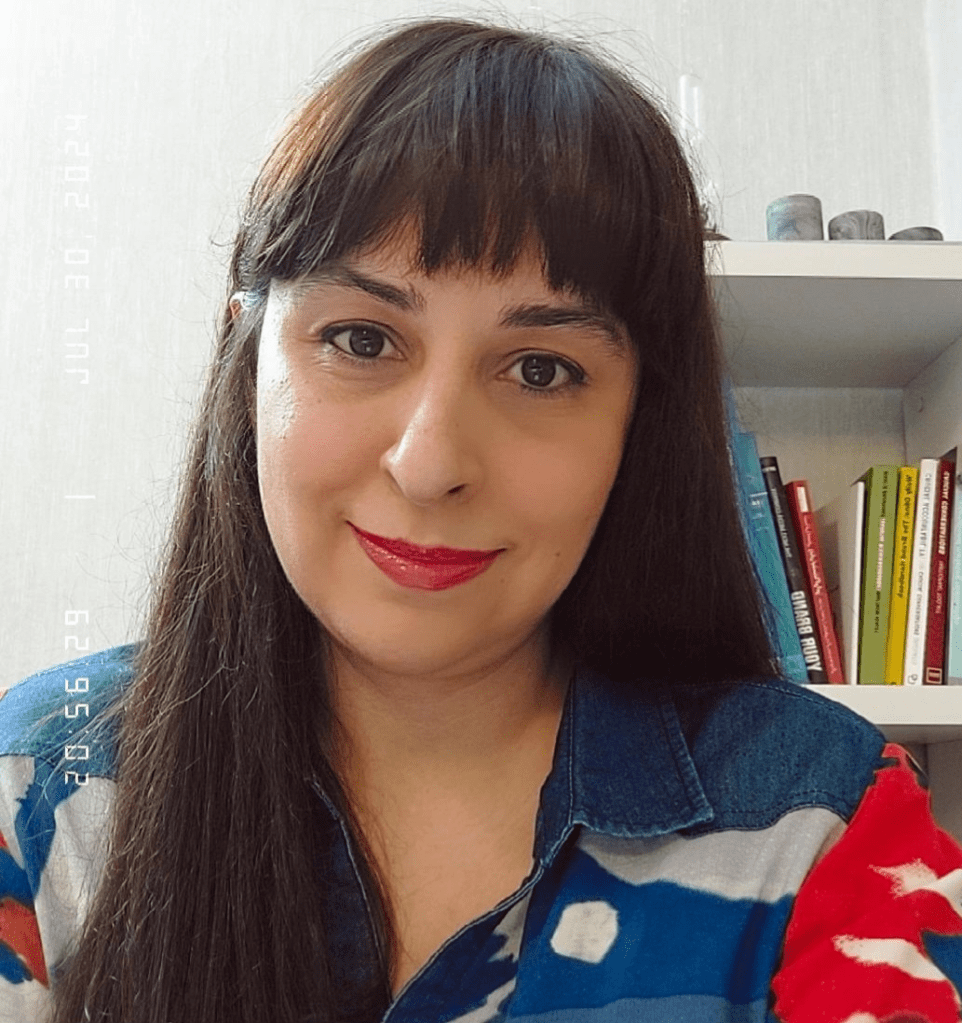
Mahsa Hariri is a life coach, activist, and intersectional feminist focused on the rights and lived realities of single women in Iran. She is currently pursuing a master’s degree in Social Studies and researching Singlism and singlehood studies within Iranian society.
After 20 years of organizational work, including a decade in management, education, and consulting, she shifted her professional path toward coaching and activism five years ago. This transition was prompted by burnout and the compounded discrimination she experienced as a woman, single, and independent. Earlier, she had also been forced to abandon her doctoral studies in Marketing Management in Iran due to similar pressures.
Today, Mahsa works critically and through a feminist lens at the intersection of life coaching for singles and advocacy against Singlism. She is 43 years old and proudly identifies as single at heart.
[From Bella: I’ll also add that Mahsa Hariri is currently translating my Singlism book into Persian! Very happy about that.]
[Notes: (1) The opinions expressed here do not represent the official positions of Singles Equality. (2) I’ll post all these blog posts at the UE Facebook page; please join our discussions there. (3) Disclosure: Links to books may include affiliate links. (4) For links to previous columns, click here.]


 Singles Equality | Singles Bill of Rights
Leave a comment